Introduction to Alkalis and pH
Chemistry is the science that explains the substances around us and the changes they undergo. Among the most important chemical concepts taught in schools and colleges are acids, bases, alkalis, and the pH scale. These topics are not just theoretical ideas found in textbooks, but they are deeply connected to daily life, industry, medicine, agriculture, and environmental science. Understanding alkalis and pH helps us explain why soap cleans grease, why antacids relieve stomach pain, and why soil quality affects plant growth.
An alkali is a special type of base that dissolves in water and produces hydroxide ions. The pH scale is a numerical scale used to measure how acidic or alkaline a substance is. Together, these two ideas form a foundation of chemical knowledge that allows scientists and students to predict reactions, control industrial processes, and understand biological systems.
What is an Alkali
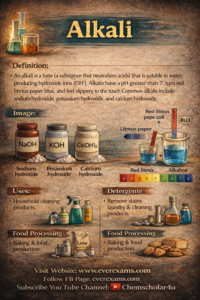
An alkali is a base that is soluble in water. When an alkali dissolves in water, it releases hydroxide ions, which are negatively charged particles made of oxygen and hydrogen. These hydroxide ions are responsible for the characteristic properties of alkalis, such as their slippery feel, bitter taste, and ability to neutralize acids. Not all bases are alkalis because some bases do not dissolve in water. For example, copper oxide is a base but not an alkali because it is insoluble in water.
Common examples of alkalis include sodium hydroxide, potassium hydroxide, calcium hydroxide, and ammonium hydroxide. These substances are widely used in industries, laboratories, and homes. Sodium hydroxide is used in soap making and paper production. Potassium hydroxide is used in fertilizers and batteries. Calcium hydroxide, also known as slaked lime, is used in construction and agriculture.
Properties of Alkalis
Alkalis share several important physical and chemical properties. They feel slippery when touched because they react with the natural oils on the skin. They turn red litmus paper blue, which is a common laboratory test to identify basic substances. Alkalis have a pH value greater than seven, which indicates their basic nature on the pH scale.
Alkalis also react with acids in a process called neutralization. During neutralization, an acid and an alkali react to produce salt and water. This reaction is extremely important in both chemistry and everyday life. For instance, when someone takes an antacid tablet to relieve heartburn, the alkali in the tablet neutralizes excess stomach acid.
Understanding the pH Scale
The pH scale is a logarithmic scale that measures how acidic or basic a solution is. It usually ranges from zero to fourteen. A pH value of seven is considered neutral. Pure water has a pH of seven. Substances with pH values less than seven are acidic, while substances with pH values greater than seven are basic or alkaline.
The pH scale is logarithmic, which means that each whole number change represents a tenfold change in acidity or alkalinity. This makes the scale very powerful for comparing the strength of different solutions. For example, a solution with a pH of ten is ten times more alkaline than a solution with a pH of nine.
Importance of pH in Daily Life
The concept of pH is extremely important in everyday life. The human body carefully controls the pH of blood, which must stay within a narrow range around 7.4. If blood pH becomes too acidic or too alkaline, it can be life threatening. Enzymes in the body also function only within specific pH ranges.
In agriculture, soil pH determines which crops can grow successfully. Some plants prefer slightly acidic soil, while others grow better in neutral or slightly alkaline soil. Farmers often test soil pH and add lime to reduce acidity when necessary. In swimming pools, pH must be carefully controlled to ensure water is safe and comfortable for swimmers.
Strong and Weak Alkalis
Not all alkalis are equally strong. Strong alkalis, such as sodium hydroxide and potassium hydroxide, completely dissociate in water, releasing a large number of hydroxide ions. Weak alkalis, such as ammonium hydroxide, only partially dissociate in water. The strength of an alkali affects how it reacts with other substances and how dangerous it can be.
Strong alkalis are corrosive and can cause severe burns on skin and eyes. Because of this, they must be handled with great care in laboratories and industries. Weak alkalis are less dangerous but still require proper safety measures.
Uses of Alkalis in Industry
Alkalis play a major role in many industrial processes. Sodium hydroxide is used in the manufacture of soap and detergents through a process called saponification. It is also used in paper production, textile processing, and petroleum refining. Potassium hydroxide is used in the production of soft soaps and alkaline batteries.
Calcium hydroxide is used in water treatment to remove impurities and adjust pH levels. It is also used in the construction industry for making cement and mortar. Ammonium hydroxide is used in cleaning agents and in the production of fertilizers.
Alkalis in Medicine
Alkalis are important in medicine as well. Antacids contain mild alkalis such as magnesium hydroxide or calcium carbonate. These substances neutralize excess hydrochloric acid in the stomach, providing relief from indigestion and heartburn. Doctors also use alkaline solutions to treat certain types of poisoning and chemical burns.
The pH of blood and body fluids is carefully monitored in hospitals. Intravenous fluids are designed to maintain proper pH balance in patients. Even small changes in pH can affect how drugs work in the body.
Environmental Importance of pH
The pH of rainwater, rivers, lakes, and oceans is crucial for the survival of plants and animals. Acid rain, which is caused by pollution, lowers the pH of soil and water bodies. This can damage forests, harm aquatic life, and reduce crop yields. Scientists monitor environmental pH to detect pollution and assess ecosystem health.
Oceans are becoming more acidic due to increased carbon dioxide in the atmosphere. This change in pH affects marine organisms that rely on calcium carbonate to build shells and skeletons. Understanding pH helps scientists study climate change and its effects on the planet.
Interesting Facts About Alkalis and pH
Soap works because it is alkaline. The alkali helps break down grease and oils, allowing them to mix with water and be washed away. Baking soda is a mild alkali that can neutralize odors and is often used in cooking and cleaning. Toothpaste is slightly alkaline to help neutralize acids produced by bacteria in the mouth.
The word pH stands for potential of hydrogen. It refers to the concentration of hydrogen ions in a solution. The lower the pH, the higher the concentration of hydrogen ions, and the more acidic the solution. The higher the pH, the lower the hydrogen ion concentration, and the more alkaline the solution.
Neutralization Reactions
Neutralization is one of the most important reactions involving alkalis. When an acid reacts with an alkali, the hydrogen ions from the acid combine with hydroxide ions from the alkali to form water. At the same time, a salt is produced. This reaction is used in many practical applications, including treating acidic soil and neutralizing industrial waste.
Neutralization reactions are usually exothermic, meaning they release heat. This is why adding water to concentrated alkali solutions must be done carefully, as it can cause splashing and burns.
Testing pH in the Laboratory
Scientists use indicators to measure pH. Indicators are substances that change color depending on the acidity or alkalinity of a solution. Litmus paper, universal indicator, and pH meters are common tools used in laboratories. A pH meter provides very accurate readings and is used in research and industrial settings.
Role of Alkalis in Agriculture
Farmers use alkalis such as lime to reduce soil acidity. Many crops cannot grow well in highly acidic soil because essential nutrients become less available. By adding alkaline substances, farmers can improve soil fertility and increase crop production. Soil testing is an important part of modern agriculture.
Conclusion
Alkalis and the pH scale are fundamental concepts in chemistry that influence daily life, industry, medicine, agriculture, and the environment. From cleaning products and food preparation to environmental protection and medical treatments, the role of alkalis and pH is everywhere. A clear understanding of these topics helps students appreciate the importance of chemistry and its practical applications in the real world.
Simple pH Calculator
Enter hydrogen ion concentration in moles per liter to calculate pH.